Planning a fitness amenity for hotels isn’t easy. Your setup needs to fit the floor plan, serve guests with different routines, and work without a coach on-site. The best model is one guests can use confidently, and your team can manage consistently.
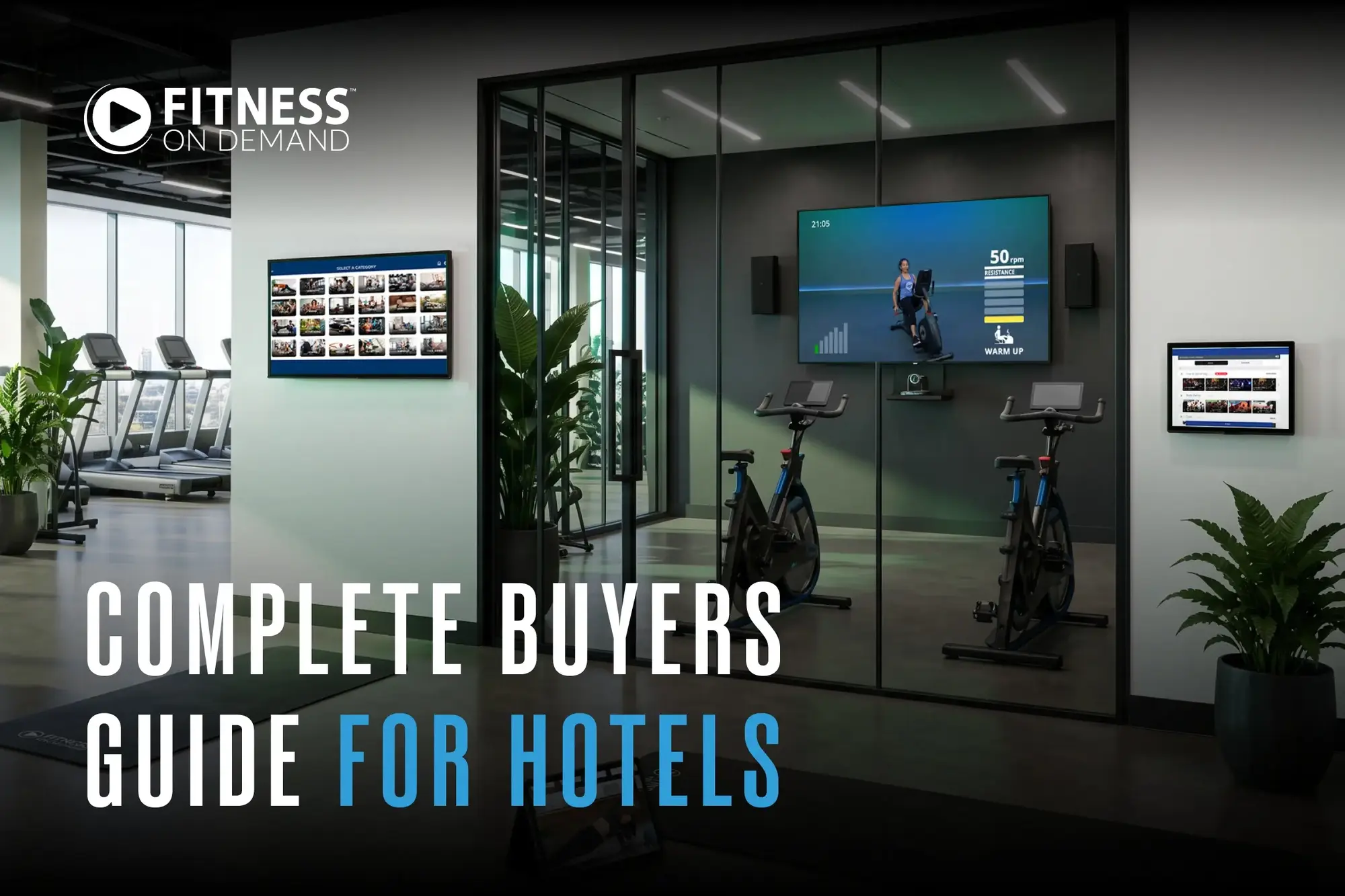
Below, we’ll compare three different approaches (equipment-only, hybrid, and digital-first) and give you a clear scorecard you can use to weigh your options against.
Size up your space and staffing limits first
The first thing every operator needs to look at is the room they can spare. Something that was repurposed on a time crunch will always be a far cry from the dedicated hotel fitness center your guests expect. Map usable areas, access paths, storage, and equipment clearance, because a room that is packed with few people won’t feel premium.
Then there’s staffing. You can run an unstaffed hotel gym, but that involves intuitive equipment, safety guidance, a tight cleaning schedule, and an easy way to report problems. Your team can probably handle routine safety checks, but complex machines may add maintenance overhead.
Before shopping, ask:
- How much square footage can you dedicate?
- Who will check equipment and respond to maintenance issues?
- Who will clean the space and the machines?
- What support can your front desk provide?
- Are power, connectivity, storage, signage, and safe access covered?
- Which legal local requirements and/or hotel brand standards apply?
Treat space and staffing as your first filter. Every choice after should adapt to the space, staff, and, of course, budget you can allocate to the fitness room.
Plan for guests who work out differently
Every guest will come in with different needs and preferences. Catering to all of them might seem impossible, but it becomes easier once you separate them into two clear groups: business travelers (with established routines) and leisure guests (who may be more focused on tourism).
One room can serve both groups with recognizable choices, open floor space, beginner guidance, and versatile equipment. At the same time, short guided sessions, mobility work, and low-impact options welcome occasional exercisers while supporting guests with already established routines.
Compare your hotel fitness amenity options
Hotels have several ways to build or modernize a fitness amenity. The right approach depends on your available space, staffing, budget, and the experience you want to offer guests.
Approach | Space needed | Staffing | Guest appeal | Costs |
| Equipment-only | Moderate to high | Checks, maintenance, repairs | Familiar to regular exercisers | Higher upfront spend plus upkeep |
| Hybrid space | Moderate | Equipment checks and basic tech support | Combines familiar gear with guided options | Equipment plus display and content costs |
| Fully digital, on-demand fitness | Low to moderate | Technical support | Broad guided choices on guests’ schedules | Barely any equipment spend but recurring platform fees |
Equipment-only hotel gyms
A traditional room with cardio and strength equipment is familiar and straightforward. A functional setup might include:
- Commercial cardio machines
- Dumbbells and/or fixed weights
- Benches
- Floor area with mats and mirrors
For guests who want to repeat their regular routine, it’s the perfect choice.
The trade-off is footprint and lifecycle. Buying the hotel fitness equipment is only the entry barrier: machines need regular cleaning, inspections, repairs, and, eventually, replacements. An equipment-only room is naturally more prone to logistical downtime, and it can feel intimidating for guests who don’t exercise regularly.
Hybrid spaces that pair gear with screens
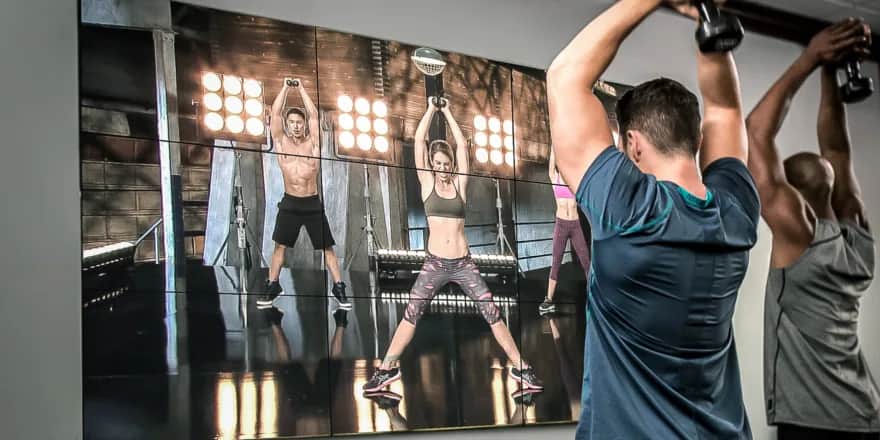
A hybrid setup pairs selected equipment with screens and connected displays. Guests can run or lift on their own terms, while others follow on-demand classes. This gives beginners a first step without a staff-led class.
The offer can even extend beyond the gym with in-room fitness options, adding resistance bands, mats, and other loaner equipment. The idea is to add variety without using more square footage, widening guest appeal through a middle path between traditional and digital fitness.
Fully digital, on-demand fitness
A screen-led setup delivers guided workouts without filling the room with machines. Virtual fitness for hotels lets guests choose sessions around their schedules, taking advantage of technology such as touchscreen workout stations to make navigation intuitive and self-directed. Digital-first options also support portfolio consistency: the same experience is delivered across multiple facilities and aligns with hotel brand standards.
Of course, a screen won’t replace heavy free-weight training, and digital access still needs reliable connectivity and technical support. It can’t replace machines, but it does broaden the menu for most guests.
Meet brand standards without a big capital outlay
Your brand or flag standards will probably shape fitness requirements, ranging from maintenance and equipment to signage and accessibility. The key to staying within a sensible hotel amenity budget is to phase out the work when a full refresh isn’t feasible. Add options as needs and budget allow, and based on guest feedback.
Ownership groups and hotel managers should also factor operating costs into the comparison. Repairs, replacement cycles, licensing, connectivity, and content fees can quickly add to the upfront costs of setting up the room. Plan ahead, and make sure you understand what’s included in each contract and what happens when a device fails.
The hospitality “10/5” rule still applies: an unattended room can’t provide that human touch most times, so the space should feel welcoming at first glance. Opt for clear signage, simple instructions, visible help information, and an obvious workout starting point whenever possible.
Choose fitness content that works without a coach
Content should guide without being overwhelming. Clear demonstrations, options for different fitness levels and preferences, short formats, and instructions that don’t assume any expertise. Keep in mind that account creation, app downloads, or any other kind of setup can discourage use. When evaluating a fitness content library, check for:
- Variety
- Refresh frequency
- Licensing
- Accessibility
- Navigation
Does it cover all grounds? Can guests browse it easily? Does it work on your own devices? Strong fitness content for hotel gyms should have a positive answer to all these questions to make it easy to use independently.
Score your options with a simple buying framework
Rate each proposal as “strong,” “acceptable,” or “weak” against the same four questions:
- Space efficiency: Can it fit with room to move and clear circulation?
- Guest experience breadth: Does it serve both experienced exercisers and beginners?
- Ease of management: Can your existing team keep it clean and working safely?
- Predictable cost: Are setup, upkeep, replacement, licensing, and service costs clear?
Compare each option and model based on these tests. The best wellness amenity plan should suit your guests and team as well as fit your budget and standards.
Bring consistent fitness to every hospitality property
Digital fitness for hotels and resorts should pair a manageable setup with a consistent guest experience. Saving space and running on a lean staff should never mean that your guests leave unsatisfied or without exercising.
Fitness On Demand offers virtual fitness and wellness for hospitality, knowing that a great guest experience and budget constraints aren’t mutually exclusive. Request a demo with our team today to find out how we can help.

Author
Luke Miska
Luke Miska is a results-driven business management visionary with a stellar record developing operationalizing strategies, experiences and measurable results that engage teams and customers to lead healthier lives. He leverages his passion for customer-centric strategies and aligns goals between customer needs and organizational priorities, catalyzing business success.