The digital fitness industry is entering 2026 with unstoppable momentum. What began as a convenient novelty has evolved into a key component of how fitness brands attract and retain members. With 40% of gym members wanting access to fitness in the gym, at home, and on the go simultaneously, hybrid fitness models, powered by digital tools, are becoming more than just nice-to-haves.
From on-demand content to immersive technologies, digital tools allow gyms, residential communities, corporate wellness programs, and other fitness environments to expand their offerings without overloading resources. They also open new doors to improving performance by collecting and analyzing user data. This gives gym owners and managers clear visibility into what works and what needs improvement, so they can make timely adjustments and keep up with shifting trends and member demands.
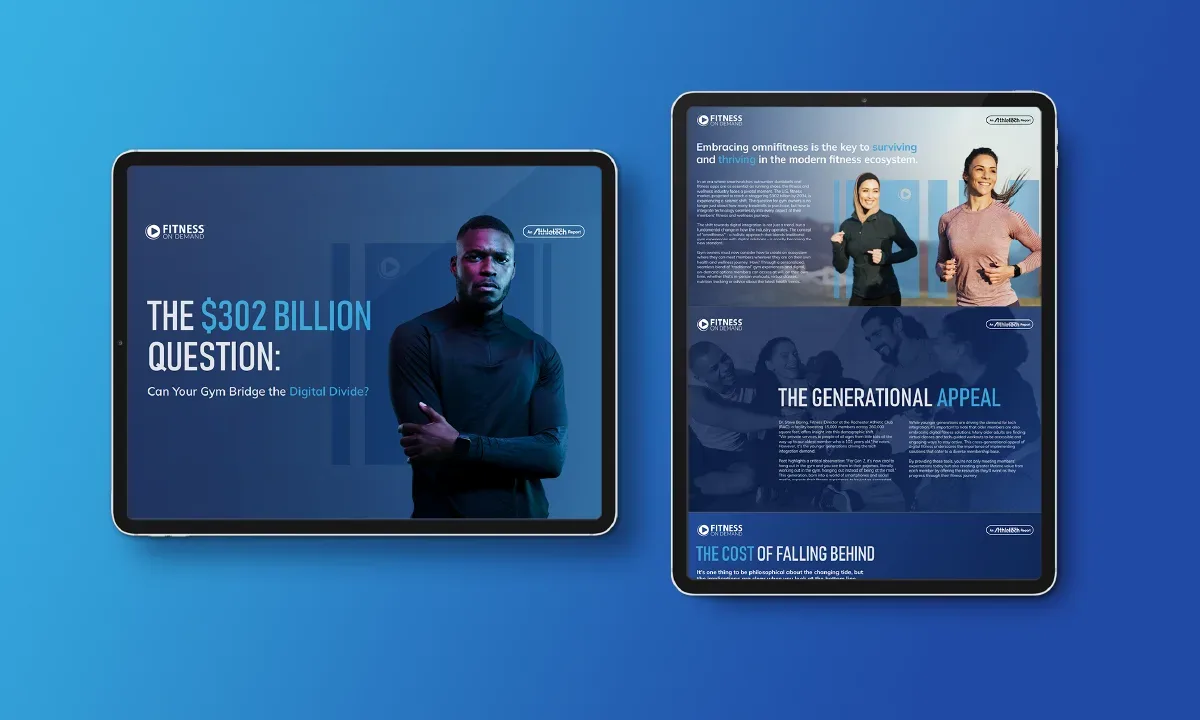
The $302 Billion Question
Can your gym bridge the digital divide? Explore how to integrate digital solutions seamlessly into your fitness ecosystem in this Athletech News Report!
To help you stay ahead of the curve, this article explores the industry’s market share and key fitness trends that will shape 2026. We’ll also look at the impact of digital fitness solutions on industry growth.
Digital Fitness Market Share Overview in 2026
The outlook for the entire fitness industry remains strong. The market size for the fitness, health, and gym industry was valued at approximately $45 billion in 2025, followed by an increase in people engaging in physical activities. A particular demand, however, has been seen in the digital fitness sector, with more people relying on technological advancements to meet their health and fitness goals.
According to Statista, the online revenue for the eServices fitness market in the US was predicted to reach more than $5 billion in 2024, accounting only for apps and wearables. This indicates a clear demand for digital fitness products and services and forecasts their big impact on the entire market.
A 2025 survey from the American College of Sports Medicine (ACSM) showcases that these digital technologies are (and will continue) experiencing an increase in demand and adoption:
- Wearable technology: Since 2016, devices like fitness trackers, smartwatches, and heart rate monitors have been growing in popularity. They help users track physical activity and overall health, as well as receive and follow personalized training.
- Fitness apps: Fitness apps were downloaded 850 million times only in 2023. This indicates a clear demand for flexible, adaptable, and customizable fitness programming that they deliver.
- On-demand exercise classes: As they allow users access to live and pre-recorded fitness programs from any location, on-demand classes are still in high demand. They bring the best of both worlds: human interactions and digital accessibility.
These solutions will likely shape the state of the market in 2026 and beyond, driven by the users’ growing need to access fitness both in person and remotely, from anywhere. Brands that adopt these solutions will ultimately get a leg up in the competition, better serving their members with personalized, convenient, and flexible services.
The Rise of Hybrid Fitness Membership Models
The hybrid fitness model’s value proposition is to provide a unified platform for physical and digital environments. This allows members to attend in-person classes while also enjoying the convenience of remote access when they’re on the go. With hybrid models, gyms and fitness centers can cater to busy professionals, parents, or really anyone managing too many commitments.
For members, having a single membership that extends to both physical and digital environments brings the flexibility to work out anywhere, anytime. It also allows them to tailor their workouts as they prefer. One day, they can join the gym, and the other day, they can follow a virtual yoga class for meditation.
Ultimately, the flexibility, convenience, and personalization of connected fitness motivate members to stay longer with a provider and increase their satisfaction. This directly impacts acquisition and retention, helping gym and health club owners boost profits.
Hybrid models also maximize equipment and facility usage by filling off-peak hours with virtual participation, without requiring extra staff or square footage. Considering the market remains competitive, with over 90,000 businesses operating in the industry in 2025, these benefits are critical to standing out.
Branded Fitness Apps as a Competitive Advantage
Statista reports that users globally downloaded around 25 million fitness and workout apps only in January 2025. This supports the notion that the adoption of digital fitness solutions has been rapidly growing over the last five years.
Branded fitness apps help gym and health club owners deliver live and on-demand content and allow users to schedule workouts, connect with other members, track their progress, join loyalty programs, and much more. This contributes to a more convenient experience and motivates users to exercise, engage with your offerings, and stay with you for longer.
The personalization and convenience of fitness apps ultimately drive loyalty and customer retention, impacting the bottom line. With ready-made app solutions such as the Flex App from Fitness On Demand, you can also customize your offering with your logo, images, and colors to increase brand awareness and stay on top of members’ minds.
On-Demand and Virtual Fitness Content Trends
Throughout 2025, some of the most in-demand fitness formats included:
- Programs for older adults
- Exercise for weight loss
- Traditional strength training
- High-intensity interval training (HIIT)
- Health/wellness coaching
- Youth athletic development
- Influencer/ambassador-led fitness programs
Users enjoyed taking part in these activities both in person and through digital solutions, such as on-demand classes and live training programs. Digital content can even be utilized by property managers to keep residents engaged with wellness trends without proportional increases in square footage or equipment.
But while the demand for digital content is definitely on the rise, people still seek in-person experiences, especially boutique fitness classes and wellness retreats. This means that brands striking the right balance between online and in-person program delivery will be the ones to benefit the most in 2026 and beyond.
Immersive and Interactive Fitness Technology
Gamification, in which platforms and apps use social and reward elements to motivate users, much like in video games, is starting to change the way people exercise. They can now connect, compete, and communicate with friends no matter where they are, which tends to keep engagement high and motivate higher participation in fitness activities.
Fitness On Demand gives you the opportunity to introduce gamification both in your digital and physical locations. You can use our Flex App to engage users with community challenges, and our digital signage to entertain and inspire people in the gym. From building news and activity promotions to fun facts and leaderboards, you can leverage digital signage to keep people in the loop and brighten the space, making it feel more immersive and interactive.
Emerging technologies like virtual reality (VR) and augmented reality (AR) are also slowly making their way toward all aspects of our lives, including fitness. As these technologies advance, they’ll be even better at altering users’ perception and encouraging them to exercise even in the most tedious settings. Imagine a busy professional in their hotel room, trying to exercise after a hard day at work. VR/AR technologies can help them move their exercise to the great outdoors. They can do their sit-ups while watching the sea without ever leaving the room.
What is reshaping the wellness industry?
Discover which technology and trends are influencing the industry in this Athletech News Technology & Innovation Outlook report.
Data, Analytics, and Personalization as Growth Drivers
At the forefront of digital innovation lies data and analytics. Digital tools allow you to measure participation, completion, and engagement rates in your programs and see what’s working and why in real time. For those classes that aren’t performing as they should, your teams can easily adjust schedules and locations on the fly. This helps deliver personalized offerings and a better experience for your members, ultimately improving gym and fitness facility performance.
What’s Growing Fastest in the Digital Fitness Market
With people increasingly focusing on functional nutrition, healthy aging, appearance and aesthetics, weight management, and mindfulness, the fitness space is following the lead. Data-driven training technology is gaining traction. Users of wearable devices and fitness apps want to track exercise stimulus in real-time, enjoy individualized coaching from home, and track their vitals, such as sleep and heart rate, for comprehensive health management.
The need for instant and comprehensive feedback during exercises shows that today’s fitness enthusiasts want personalized and immersive digital experiences. Technology is no longer optional — it’s critical to gym and fitness centers’ survival, and users demand more from it every day.
As far as digital content goes, many people report higher stress and failure to meet mental health needs, so the fitness industry may also see an increase in demand for mindfulness-focused content.
All of this indicates that gyms and fitness centers will need to adopt holistic strategies to attract and retain members in 2026 and beyond. Alongside balancing in-person and digital workouts, integrating technology into their offerings, and personalizing solutions to the modern users’ needs, brands will need to think about sustainability.
As almost nine in ten people prioritize sustainability-focused practices in their lives, companies across industries are examining their impact on the environment. Fortunately, digital solutions, such as fitness apps and on-demand content, can help fitness centers operate and scale while lowering their carbon footprint.
Where Gym Owners and Operators Should Invest Next
The latest fitness trends reflect a broader transformation in how people engage with their health and their routines. Hybrid memberships, on-demand content, mobile apps, and data-driven personalization are some of the foundational elements of future-proof fitness operations.
For those who run fitness clubs or gyms, the path forward lies in strategic investments that balance innovation with functionality. At Fitness On Demand, we can help you meet the most popular fitness trends and scale up efficiently with the right technology and content.
Fitness On Demand provides on-demand classes, digital signage, and a ready-made fitness app to future-proof your digital strategy for 2026 and beyond. With 1,800+ premium classes from renowned fitness brands, interactive displays and screens, and a connected app experience, you'll be ready to tackle the demands of today and tomorrow.
Get in touch with our team to explore further.

Author
Luke Miska
Luke Miska is a results-driven business management visionary with a stellar record developing operationalizing strategies, experiences and measurable results that engage teams and customers to lead healthier lives. He leverages his passion for customer-centric strategies and aligns goals between customer needs and organizational priorities, catalyzing business success.