There’s a difference between a high-tech gym and a gym that has a lot of gadgets. The former builds a member experience around connected content and smart systems, while giving you data you can get value from. The latter, usually, ends up with a pile of expensive equipment nobody knows how to use.
Whether you’re planning a new build or rethinking an existing one, the goal is to choose the layers of technology that make members want to come back. This means content they can access on their own terms, screens that keep them engaged, systems that remove friction from their day-to-day stress, and more.
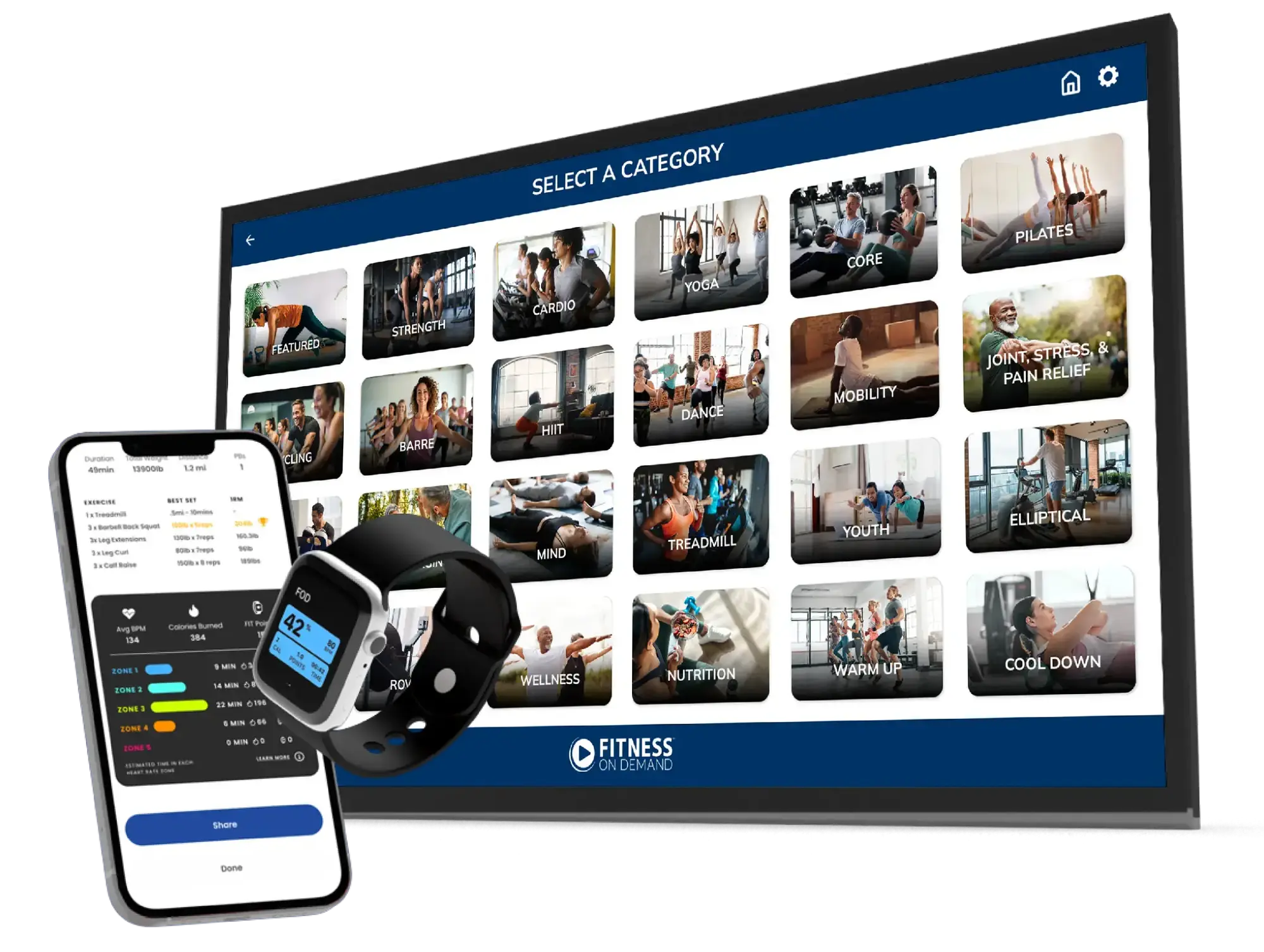
Centralized Digital Fitness Solutions
Centralize your fitness technology across all of your screens with white-label opportunities from a mobile app to a fitness touchscreen.
Design for Experience First, Equipment Second
It’s easy to fall into the trap of thinking that a high-tech gym means bolting on more screens to the wall and buying flashy equipment. But hardware alone doesn’t retain members, nor does it create a gym experience that your customers will necessarily appreciate.
Everything starts before you even plug a screen. Planning your gym’s layout with sight lines on traffic flow, signage placement, and retention strategies determines whether your technology gets used or not. A well-planned floor makes every decision feel natural, as you’ll have a clear vision of your goals and needs.
Every piece of technology should answer a specific question when you’re designing a gym in 2026: does this make the member experience better, easier, and/or more consistent? If a new system doesn’t tie back to engagement, retention, or operational ease, it will become another item collecting dust.
Good commercial gym design treats every piece of the puzzle as part of a connected system working toward keeping people walking through the door. Once you have that lens in place, the rest of your decisions get a lot easier to make.
Give Members Content They Can Access on Their Own Terms
Fixed class schedules used to be the norm, but, nowadays, they’re often the reason someone stops going to classes. Members want (and need) flexibility, and a strong commercial fitness center design focuses on versatility above all else.
On-demand and self-service content is where this starts, allowing members to build their own workouts and schedules on their own terms. That, alone, can remove a surprising number of concerns that keep members away from your services:
- Missed a class? They can easily catch a similar session on-demand instead of waiting a week for the next one.
- Working out during off-peak hours? A connected screen means they’re never training without guidance, no matter the time.
- Intimidated? A private, on-screen workout gives newer members a low-pressure way to build confidence while getting real exercise done.
High-tech gym equipment clearly pulls its weight. At Fitness On Demand, we know how much having screens with full content libraries is worth for your operations. We partnered with Les Mills to give your members variety and quality without you needing to manage a dozen separate content deals.
Still, none of this works without the right hardware behind it. Smart equipment built for connected gyms is what makes on-demand content and self-service workouts possible in the first place. The answer isn’t always to build the latest and flashiest machines on the market, but they should hold up to your goals and your members’ needs.
The end result is a gym that’s open around the clock and feels alive even outside staffed class hours. At the same time, your members will feel like the gym works around their life instead of the other way around.
Turn Idle Screens Into Community and Engagement Tools
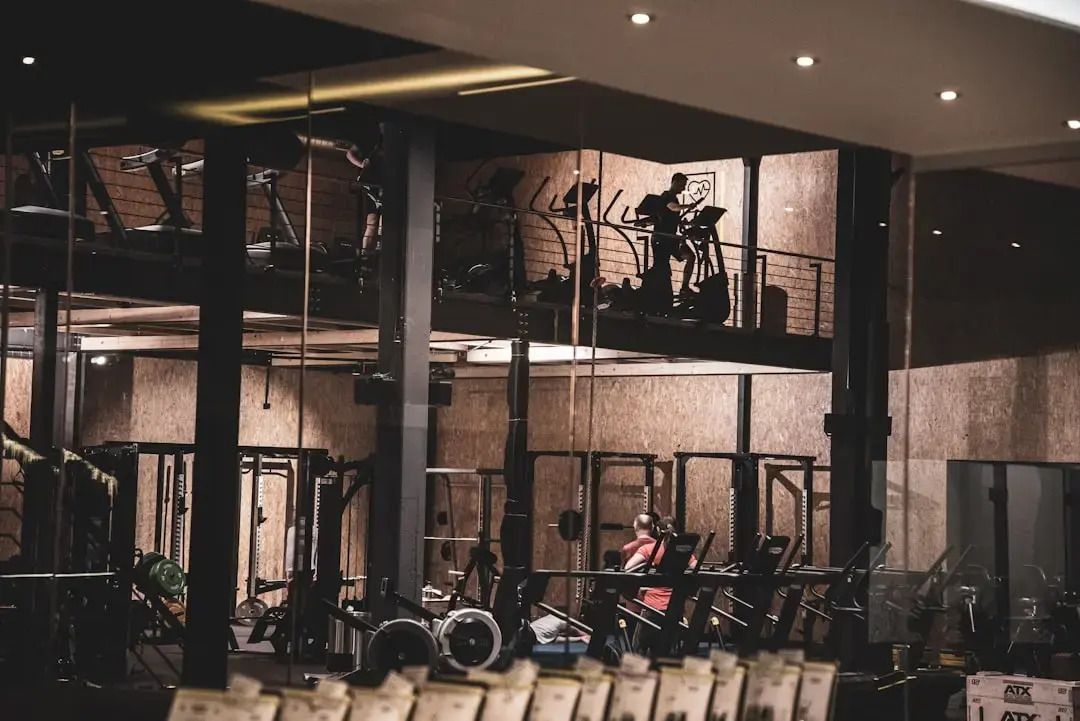
Walk into most gyms and you’ll spot at least one screen doing absolutely nothing. A TV stuck on a loop is a piece of real estate nobody takes advantage of, but it’s an easy fix.
Digital signage turns those idle member-facing screens into a working part of your gym’s identity. You can run promotions for new classes, highlights for events, a bit of trivia, or spotlight member milestones. None of this requires innovative gym equipment or a big budget for smart gym features.
Although it seems like a chance for your marketing team, the real winner here is your community. If your signage consistently reflects what’s happening in your gym, members will start to feel like they’re part of something beyond paying for equipment. Using digital signage to engage members can also reinforce your brand without extra sales pitches.
Make Access and Scheduling Effortless
Staff time spent on things that shouldn’t require staff at all is wasted time that adds stress and operational overhead for your team. Checking members in, manually tracking attendance patterns, answering the same scheduling questions on repeat, and solving basic questions are things that don’t grow your business and eat hours.
Connected fitness and self-service systems solve this. Geofencing, for example, can automatically track attendance the moment a member walks in while giving you cleaner data to work with. Frictionless entry systems mean members aren’t waiting for your staff. Self-service scheduling tools let members manage their classes without talking with the front desk.
The list could go on and on, but the point is that a well-thought-out layer of high-tech fitness equipment and infrastructure can make a massive difference in daily operations. And that, in turn, lets your staff focus on what truly matters: solving harder problems, building relationships, onboarding new members, and more.
Use the Data Your Gym Is Already Generating
Every swipe, every check-in, every booked class, and every minute on the treadmill is a data point in your digital fitness ecosystem. Most gym owners have a lot more information than they realize, and, as a consequence, their gyms can’t do much with it.
Gym innovation is about what you, as the operator, can act on behind the scenes and not only fancy equipment. Attendance patterns, for example, tell you when to staff up and when you’re overstaffed. Engagement data by class type or equipment can quickly show you what’s not pulling its weight. Usage analytics can flag early signs of individual churn, helping you improve member engagement and gym retention.
The level of visibility analytics and fitness technology bring to the table is unmatched. The gym metrics worth tracking have a huge impact on programming decisions, staffing adjustments, retention efforts, and much more. Your gym’s technology is a business tool as valuable as any other, and not just a member-facing amenity that catches newcomers’ eyes.
Budget for a Build That Scales With You
A full technology build with touch screens, signage, analytics, top-of-the-line equipment… it all sounds too expensive to defend at a budget discussion. And, more often than not, building all four layers at once is.
A full commercial build can run anywhere from $25,000 to $80,000. We don’t need to specify that making a case for such enormous spending is difficult, to say the least.
Yet, a planned, phased approach works for most gyms instead of trying to tackle everything at once. Start with the layer that solves your most immediate pain point. If member retention is your biggest challenge, on-demand content might be the first move. If staff time is the bottleneck, self-service access systems should take priority.
The commercial gym design decisions that pay off long-term are the ones that are implemented thoughtfully and with patience. Taking your time also allows you to build systems capable of scaling instead of ripping out and replacing infrastructure each time. When evaluating vendors or platforms, ask directly whether their systems are designed to expand with you or if they will force you to start from scratch when you add something new.
Choose a Technology Partner That Grows With You
There are four key layers to keep in mind when building a modern gym: content, signage, access, and analytics. Every one of these pieces works together to avoid making your gym a disconnected space where high-tech workout equipment sits collecting dust.
Naturally, stitching gym technology together is easier said than done. Handling separate vendors for screens, signage, equipment, classes, and everything else means separate contracts and separate systems. Instead, focusing on a single platform built to cover as many of these bases as possible will remove that headache and give you one place to focus on.
At Fitness On Demand, we want to provide exactly that: a coordinated infrastructure that caters to your needs and those of your members. Request a demo with our team today to see how our solutions can bridge these four layers together into one platform.

Author
Luke Miska
Luke Miska is a results-driven business management visionary with a stellar record developing operationalizing strategies, experiences and measurable results that engage teams and customers to lead healthier lives. He leverages his passion for customer-centric strategies and aligns goals between customer needs and organizational priorities, catalyzing business success.