Every gym has a dead zone: an empty corner past the water fountain, or a hallway between the locker rooms that only sees foot traffic. At the same time, your members want more than what's on the group studio schedule or happening on the cardio floor that day. A workout display for your gym solves both problems at once, turning dead space into another way for members to get a guided workout in, without adding a single shift to your schedule.
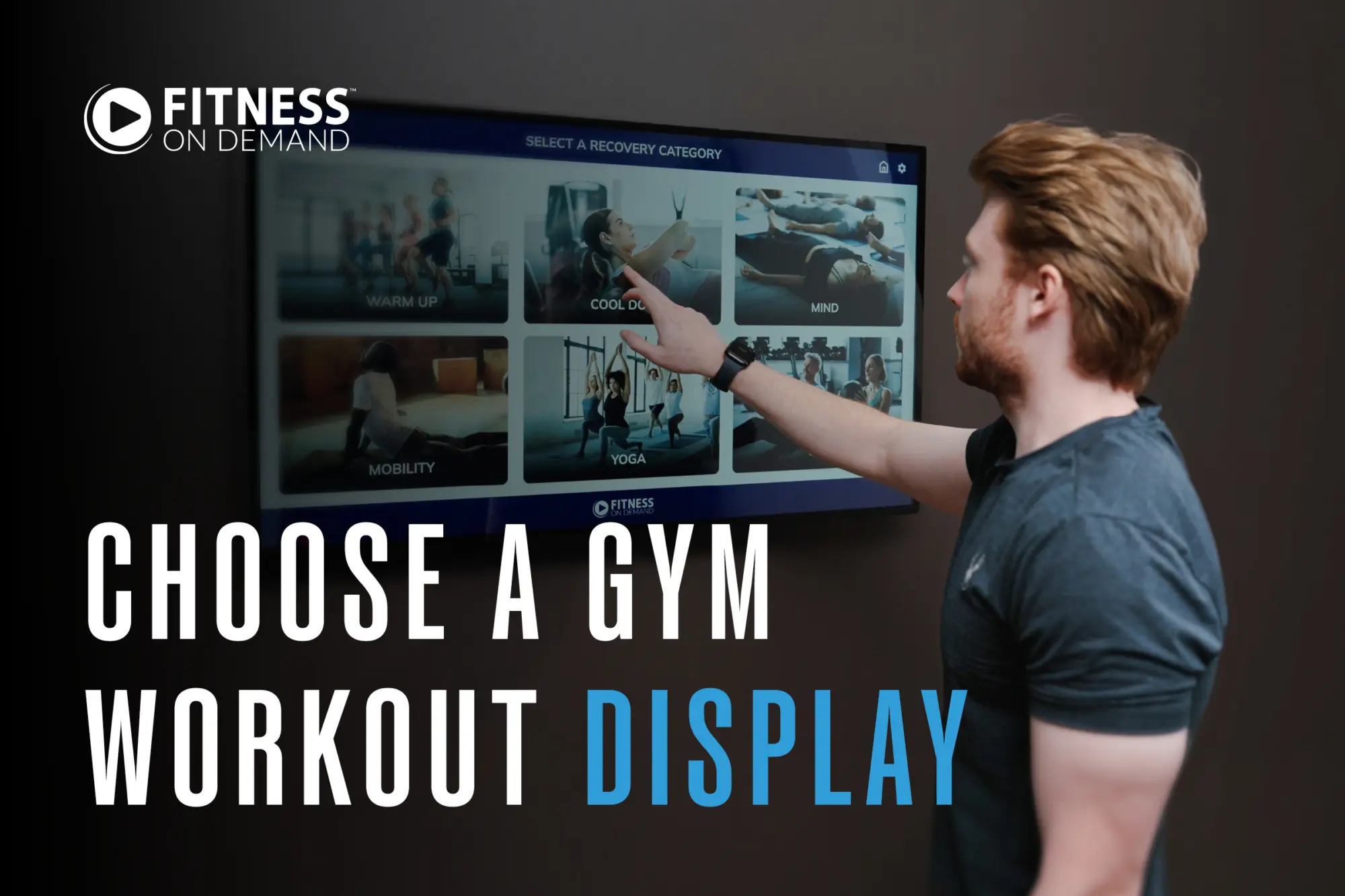
But not every display pulls its weight, and picking the wrong one could mean installing an expensive screen nobody touches after week two. Here's what separates a display worth mounting on your wall from one that becomes glorified wall art.
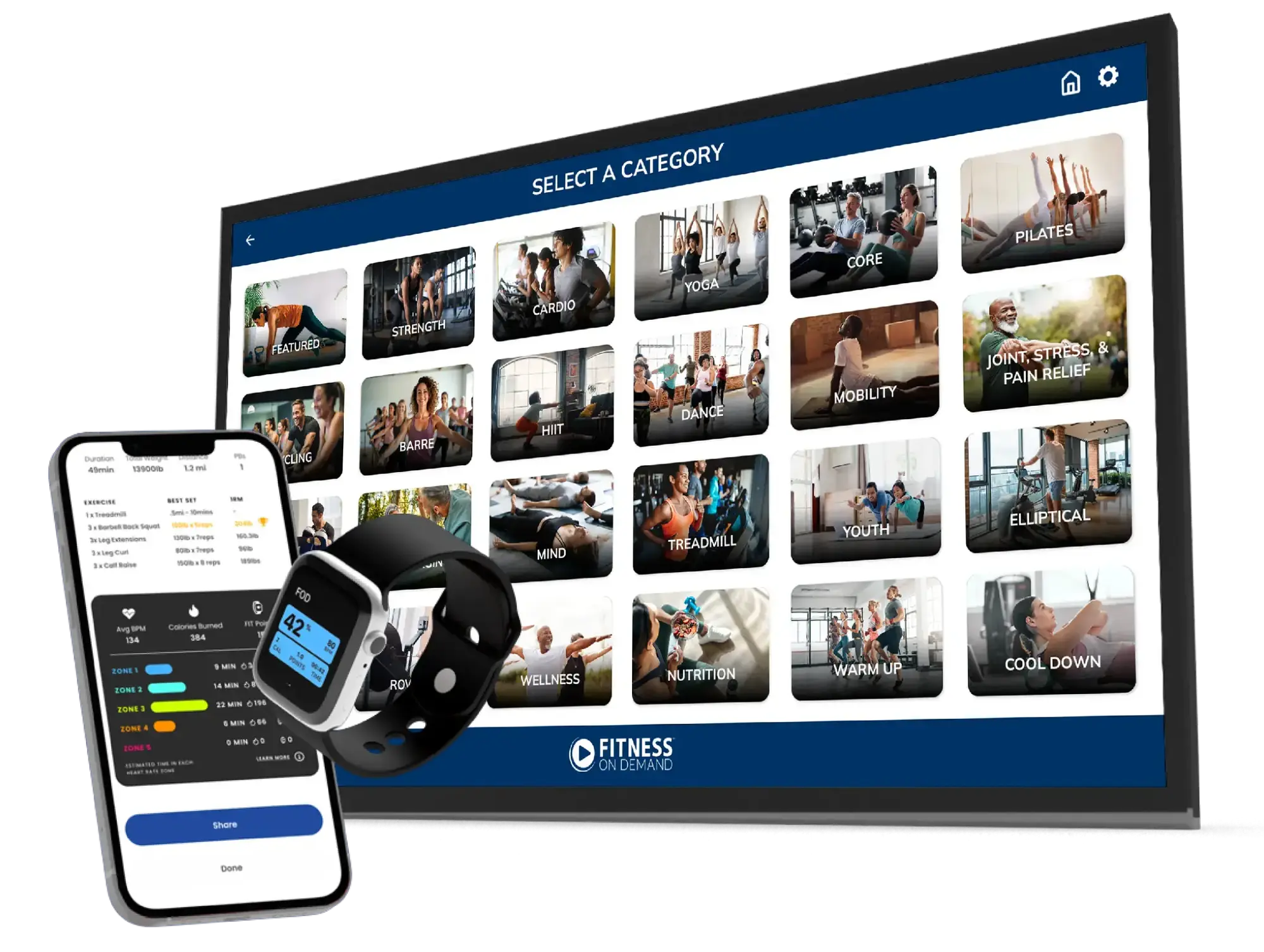
Centralized Digital Fitness Solutions
Centralize your fitness technology across all of your screens with white-label opportunities from a mobile app to a fitness touchscreen.
What a Workout Display Actually Does in a Gym
So how is a dedicated fitness kiosk different from the tablet at your front desk? A workout display for your gym is a self-service touchscreen that walks a member through a guided workout on their own, no instructor required.
Picture it less like a check-in kiosk and more like a low-cost, always-available personal trainer. A member picks a category, taps a couple of preferences, and gets a session built around what's actually available to them right then. Once it starts, the screen walks through the workout in blocks, with a built-in timer for work and rest intervals and a quick demo clip showing proper form before each move.
The right self-service workout display turns a flat screen into something members really use, instead of a TV that loops workout videos nobody watches.
Why Underused Spaces Need a Self-Service Fitness Option
An empty hallway impacts your bottom line because every square foot of your gym that isn't earning its keep is underutilized space you're still paying for. And your members feel that gap even when they can't name it. Filling it well is also a straightforward member engagement play, giving people another reason to show up between classes.
But a lot of those same members may be more hesitant to use your main floor than you might expect. A 2026 study in Frontiers in Sports and Active Living cites survey data showing 47% of people feel uncomfortable at the thought of joining a gym or fitness facility in the first place, and that discomfort doesn't disappear once they've got a membership card. It just moves to quieter corners of your building, if you give them one.
A self-service option in an underused hallway, lobby, or secondary room gives more reticent members a lower-stakes way in, while giving your regulars another reason to stick around between classes. You can make the most of your gym's layout, getting more use out of every square foot without adding staff hours.
Key Benefits
Here's what a self-service display brings to your facility once it's up on the wall:
- Guided workouts around the clock: Members can access structured sessions without waiting on a trainer's schedule or a class time slot.
- A wider content library: Hundreds of preloaded sessions across categories like strength, recovery, and cardio are refreshed and updated regularly, instead of the same five workouts on repeat.
- No added headcount: You can expand your digital fitness offering without hiring, scheduling, or paying overtime for someone to run it.
- A softer landing for new members: Reducing gymtimidation with guided workouts gives shyer or newer members a private, guided way to start instead of having to walk straight onto a crowded floor.
- A guided recovery touchscreen option: Some displays focus specifically on warm-up, mobility, and cool-down work, useful if recovery is already a request you're hearing from members.
The numbers back up these advantages. For example, when Montana Athletic Club added digital fitness options to work around limited local instructor access, 84% of their members ended up working out at home as well, and the club added five classes to its weekly schedule without hiring anyone new.
Content Variety and Programming To Look For
Not all workout displays offer the same depth of content, and that's often where the cheap options fall apart within a few months. Before you commit, look past the demo reel and ask what's inside the library.
A strong workout display covers a wide spectrum of fitness levels and formats, from a member's first week to their 500th visit. At minimum, look for:
- Strength training: Structured sessions built around the dumbbells, machines, and racks your members already have access to
- Recovery and mobility: Warm-up, cool-down, and stretching content that gives members a reason to use the display even on rest days
- Guided cardio: Interval and steady-state options members can follow without needing a class on the schedule
- A range of difficulty levels: Content that adjusts for beginners and regulars alike, so the same screen serves your whole membership base
If your gym leans into group training, it's also worth asking about live metrics, like heart rate zones or shared class stats. But note that those are more common in dedicated training-floor setups than a self-service hallway display.
How often the library refreshes is as important as which categories it covers. A display still running the same 20 workouts a year later stops earning its wall space fast, so before you sign, ask the gym technology vendor how frequently new content is added.
Ease of Use and No-Login Access
The easiest kiosk to use is one that lets a member just walk up, tap a few preferences, and start moving in under a minute, with no login, no app download, and no password to remember.
Your members will be less likely to use a self-service workout display if it requires creating an account first. For a member who already feels out of place near the free weights, a screen that asks for a username and password before they can start is one more reason to leave.
No-login access removes that barrier entirely. Intimidation reduction is one of the biggest ways to boost gym member retention. It also means your front desk doesn't have to turn into tech support every time someone forgets a password.
Space Efficiency and Hardware Considerations
How much of your gym can you fit a workout display into, and what does that mean for space utilization? It's probably more than you'd think, if you pick the right hardware for the space.
Wall-mounted units make sense for hallways, locker room entries, and other tight spots where floor space is the whole problem. Freestanding units work better in a lobby or secondary room where you have room to spare and want the display to double as a visual anchor.
Either way, don't overlook the enclosure. A touchscreen fitness setup bolted up in a high-traffic public area needs to handle bumps, sweat, and the occasional curious kid pressing every button at once. Look for commercial-grade housing built for that kind of wear, not a consumer TV in a frame.
Finally, before you settle on the size or placement of digital signage throughout your gym, walk your space the way a member would. Note that gym technology for your underused space works best when it's actually in the path people already walk, not tucked somewhere they'd have to go looking for it. And be sure to measure the corner or hallway you're eyeing to ensure the display will fit.
Customizable Branding Options
A workout display that looks like a stock piece of tech dropped into your gym doesn't do much for your brand, even when the content it offers is great. The best options let you customize the interface with your own logo, colors, and messaging, so the screen reads like it belongs to you instead of a vendor's demo unit.
White-label branding for fitness technology matters for tours and onboarding. A branded display gives you another touchpoint to reinforce what makes your gym different, right as a prospective member decides whether to sign.
If you're running other digital tools alongside your display, it's also worth asking a vendor whether a white-label fitness display is an option. Consistent branding across touchpoints tends to read as more established. Fitness On Demand builds this kind of customization into its displays by default, so branding isn't an upsell you have to negotiate for later.
Bringing a Workout Display Into Your Gym
Fitness kiosks do more than make your gym look technologically up to date. The right workout display can be the solution to multiple problems: an underused space in your gym, a gap in your programming, or members who want more ways to work out without adding to your payroll.
If you're ready to see what that could look like in your facility, Fitness On Demand's Fitness Touchscreens have all the features modern gyms are looking for: deep content libraries across strength, recovery, and cardio; no-login access; durable commercial hardware; and full branding control. Explore our fitness touchscreens and see which option best fits the space you've already got.

Author
Luke Miska
Luke Miska is a results-driven business management visionary with a stellar record developing operationalizing strategies, experiences and measurable results that engage teams and customers to lead healthier lives. He leverages his passion for customer-centric strategies and aligns goals between customer needs and organizational priorities, catalyzing business success.