Remote and hybrid work have gone beyond a temporary solution. Nowadays, teams are spread across different time zones, logging on from home offices, coworking spaces, and even during travel.
Previous approaches to wellness were mostly designed around a central office, but that won’t cut it for modern workforces: a remote staff fitness program has to reach people no matter their location or schedules.
Employee Wellness App
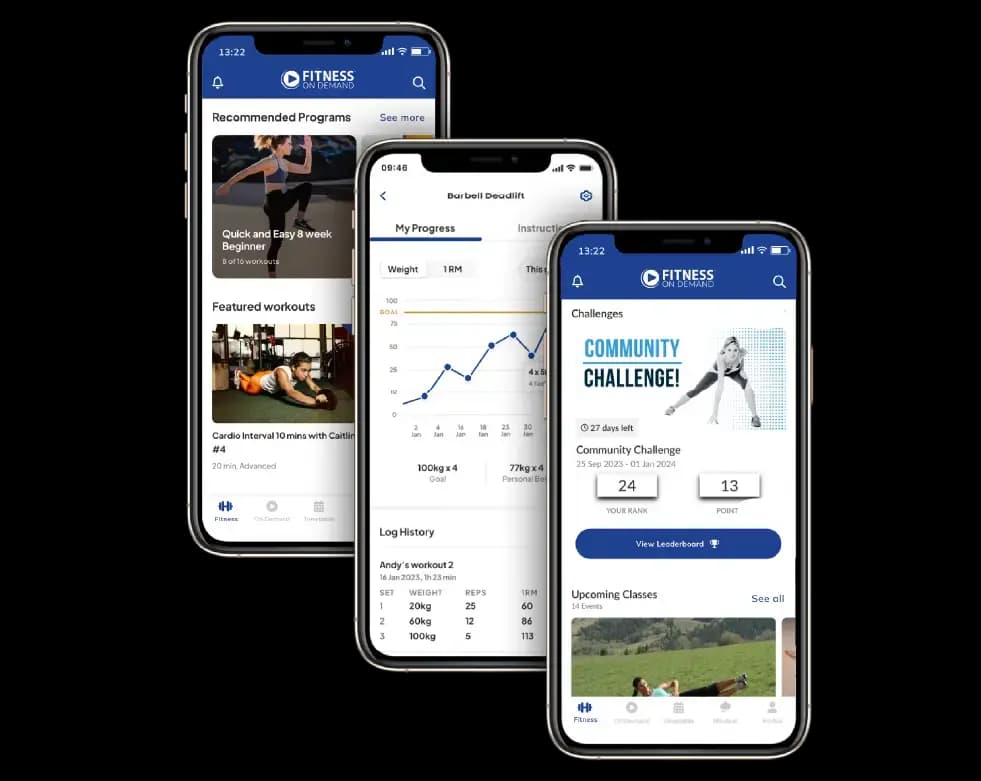
Empower your employees with access to over 1,800 cutting-edge fitness and wellness classes. Offer competitive benefits that will support attracting and retaining top talent by showing you care.
Why Remote Employees Need a Different Wellness Approach
The traditional office environment had built-in movement included. Whether it was walking to a meeting, stepping out for lunch, or greeting a colleague, these small acts broke up the isolation of desk work.
At home, an employee can go from morning to evening without changing rooms; the natural social interactions disappear, and the boundaries between work and personal time get blurred. In fact, a 2025 systematic review found that working from home increases sitting time by over half an hour and reduces daily step counts by over 2500 steps.
Virtual employee wellness programs can reduce sedentary spells and increase engagement, promoting measurable downstream effects. Businesses looking to improve their metrics will benefit from having a serious conversation about fitness and wellness.
Benefits of Investing in Fitness for Remote Employees
Investing in a corporate virtual fitness program can go beyond looking out for your employees or your operations: it can have a real impact on your revenue. A 2024 study found that, even when dealing with employees with minimal health risks, investing in wellness programs always has a positive ROI.
The business case for employee wellness programs gets even stronger when you factor in the pressures of distributed work. Lower productivity levels and higher turnover risks happen, and your finance and operations teams won’t always be able to find ways around them.
Company-wide fitness perks for remote employees aren’t cheap, but they carry weight as a retention tool. They are an organizational investment that’s visible and tangible, marking positive changes both for your operations and the employees.
What a Strong Remote Employee Fitness Program Looks Like
Versatility is the most important benchmark to building an effective virtual fitness program. Having both synchronous and asynchronous virtual fitness for a remote team allows you to serve employees across time zones and schedules equally.
Provide Live and On-Demand Virtual Fitness Classes
Virtual fitness classes for employees are the backbone of any remote wellness program.
Live sessions create shared experiences and social accountability, while replicating the energy of group classes. On-demand content, instead, fills the need for everyone who can’t make the scheduled time or prefers to work out on their own.
Similarly, a program without a mix of content, like one that only offers high-intensity options, will lose most by week four. Effective virtual group workouts cover a wide spectrum of classes and training styles:
- HIIT and cardio for employees who want high-output sessions.
- Yoga and flexibility for recovery and stress relief.
- Strength and resistance training, both with and without equipment.
- Mindfulness and breathwork to address overall mental wellness.
- Low-impact movements (like stretching and mobility) for broader accessibility.
We designed Fitness On Demand’s Corporate Wellness solution to cover all bases. It includes a vast library of over 1800 high-quality fitness and mindfulness classes, spanning all fitness levels and formats.
Make It Fun With Challenges and Team Competitions
Workplace wellness challenges play a key part in transforming a passive fitness benefit into an active engagement tool. That social layer, although seemingly irrelevant at first, is a fantastic driver for remote teams that don’t have hallway catch-ups and spontaneous connections.
There aren’t any strict rules when it comes to challenges, but here are the key workplace wellness challenge ideas that form the foundation of most competitions:
- Step or movement challenges, tracked through fitness apps and wearables.
- Seasonal themes that keep things fresh and relevant
- Department vs. department competitions.
- Monthly goal-based challenges with shared progress.
Studies show that even a daily 15-minute gamified challenge can increase sleep and health quality, improve mood, drive satisfaction rates, and promote physical activity. The idea is that you don’t need the perfect employee wellness challenges: getting people moving is the priority.
Support Your Employees With Recovery and Mindfulness
A complete remote staff fitness program accounts for not only physical fitness, but also, importantly, mental wellness.
Outdated corporate programs fall short here, covering movement but not addressing the stress and isolation that remote work creates. Recovery and wellness strategies include plans for guided meditation, breathwork, sleep support, and active recovery. Researchers have widely studied the effects of remote work on employees, concluding that it can increase mental distress and the use of mental healthcare. As such, employee mindfulness tools are more relevant than ever.
Adding a personalized wellness coach for your employees takes everything a step further. For employees navigating burnout or inconsistent routines, it can make a massive difference and show that your company cares.
Offer Flexible, Self-Directed Access
Flexibility is a non-negotiable for remote teams.
With a workforce distributed across time zones and with employees juggling caregiving responsibilities, managers can’t expect everyone to show up for a program that demands a tight schedule. This applies to group workouts, virtual meditation classes, and all other types of live content — it’s just how remote teams work.
On-demand content and mobile access provide low-friction entry points for those employees who can’t meet more rigid programs. Whether they want to participate at 10 PM or between meetings, you can meet that need without any extra heavy lifting.
Fitness On Demand’s Flex App gives teams access to virtual wellness activities for employees on their own terms, no matter where they are or when they want to join.

How to Drive Participation Across a Distributed Team
Building the program itself is only part of the job. Getting people to use it consistently is an entirely different battle, and it requires a deliberate strategy that goes beyond sending a launch-day email.
Tactics to drive sustained participation in a virtual employee wellness program vary a lot, but these are some basic virtual employee wellness ideas for retention:
- Executive participation: Leadership should both participate in and reference the program to signal that it’s being taken seriously.
- Management involvement: Integrating wellness nudges and challenge updates into team meetings and work emails keeps the program from living exclusively in HR communications.
- Multichannel promotion: Slack channels, internal newsletters, intranet posts, verbal callouts, weekly memos… these are all potential tools to reach even more people.
- Low-stakes entry points: A ten-minute stretch session is an easier first step than a full-on, 45-minute class for employees who aren’t fitness enthusiasts.
- Feedback loops: Ask employees what’s working — a program that doesn’t adapt will lose people in the long run.
All of these will benefit, but active leadership participation is vital as it will drive employee participation up to 80% when executive participation is 70% or greater.
What to Look for in a Virtual Fitness Program for Your Employees
Content quality and variety are the first things to look out for. You want to contemplate everyone and deliver professional content, staying away from shallow and low-quality libraries. Accessibility across devices without complex logins or IT-heavy rollouts is equally important: online group exercise classes and on-demand content should work as well on a phone as they do on a laptop.
Reporting and analytics determine whether you can measure impact and continue to justify the investment in the future. Look for corporate wellness platforms that surface participation data, employee wellness engagement trends, usage patterns, and other metrics without manually compiling them.
The best platforms consolidate content, delivery, and reporting into a single, easy-to-use platform. Fitness On Demand is rated as a top corporate virtual fitness platform for exactly this reason. Our programming library provides over 1,800 high-quality classes while supporting features such as digital signage and a custom-branded app.
Build a Program Your Remote Team Will Actually Use
The goal is simple: build a program that employees routinely open, complete, share with their colleagues, and, most importantly, stick with past the first month.
A well-designed remote employee fitness program helps your teams deal with burnout while building connections across large distances. When designed right, it shows up in retention and engagement, and helps stitch together a community that would otherwise be impossible.
Ready to see what this looks like in practice? Book a demo with our team today, and we’ll walk you through a platform built for all kinds of workforces.

Author
Sean Obregon
Sean Obregon is an impactful Business Development Executive forming meaningful relationships to support enhancing operational and strategic success. He utilizes his industry knowledge and experience to create solutions that align with both the needs and wants of a customer, setting a business up for success.