The fitness industry is now fully digital, but each platform tackles different needs. Consumer apps are designed for people who want to fit in a quick workout between meetings or turn their living room into a spin studio.
Commercial fitness solutions can help you boost member engagement, make better use of your gym space, centralize fitness center management, support staff, and increase revenue without making daily operations feel overwhelming. A good virtual fitness platform shapes the entire member experience, from what people see on screens in the club to how they connect with your brand outside the gym.
The problem is that many gyms still use separate systems for apps, virtual classes, digital signage, analytics, and scheduling. It can feel like putting together IKEA furniture without instructions — possible, but not much fun. That’s why more gym operators are choosing unified virtual training platforms like Fitness On Demand, which bring it all together in one system.
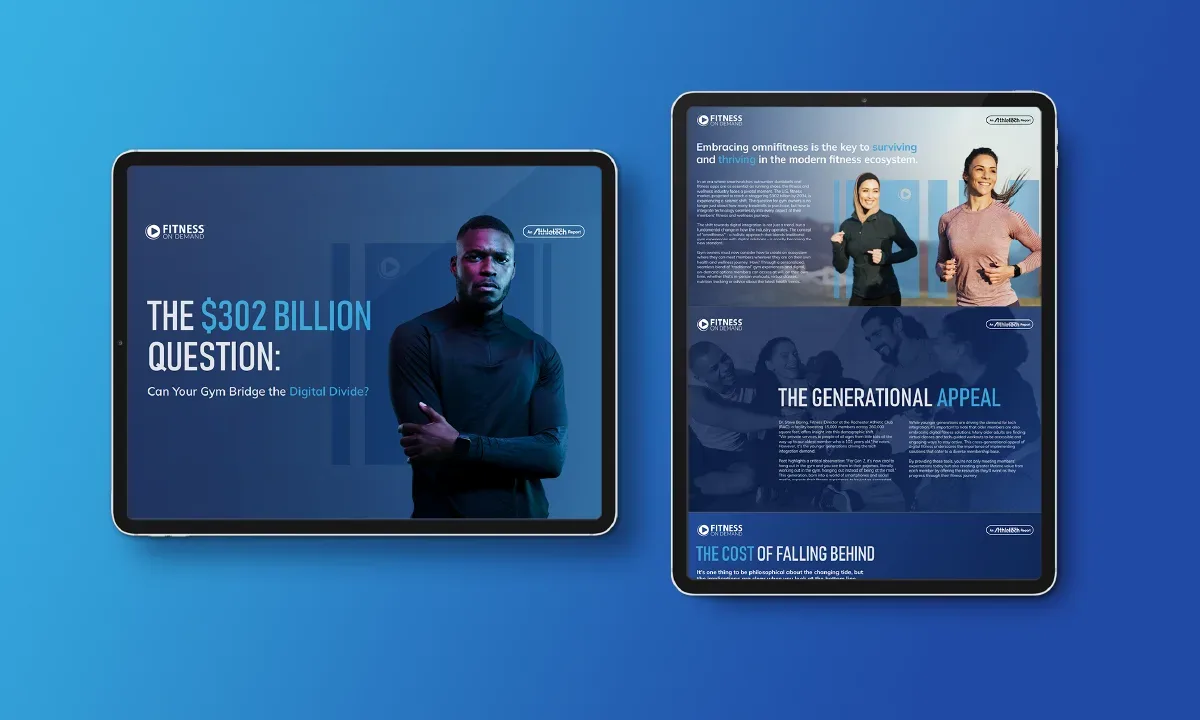
The $302 Billion Question
Can your gym bridge the digital divide? Explore how to integrate digital solutions seamlessly into your fitness ecosystem in this Athletech News Report!
In this article, we’ll explain what to look for when choosing a platform that truly fits how modern gyms work.
10 Must-Have Capabilities of a B2B Fitness Solution
B2C apps are mostly focused on individual workouts, but B2B platforms also support day-to-day operations for running a fitness business. The aim is not to add more tech for your team to manage. Instead, you want tools that make your work easier, help keep your gym members, and grow with your business.
These are the most important features to look for when choosing a virtual fitness platform for your business.
1. On-Demand and Live Content Libraries
A good content library is key to any successful on-demand fitness platform. Members expect high-quality, flexible workouts they can access in the gym, at home, or on their own schedule.
Top digital fitness platforms offer both live and on-demand classes in a range of workout styles and fitness levels. This could mean strength training, yoga, HIIT, cycling, mobility, recovery, and specialty classes taught by professional instructors. Offering variety is important because members lose interest quickly. No one wants to watch the same cycling class over and over like a TV rerun.
Accessibility is important as well. Workouts should be simple to start from studios, kiosks, mobile devices, or screens inside the facility.
For example, a gym could run virtual cycling classes during slower times and offer recovery or stretching sessions between live classes. If you want to add more options, you can check out Fitness On Demand’s content library for inspiration.
2. Digital Signage and In-Facility Experiences
Digital signage in fitness centers has moved beyond simply showing announcements on a lobby TV. Now, gyms use it to create the right atmosphere, guide members around the facility, and keep everyone updated throughout the day.
Gyms can show class schedules outside studios, promote seasonal challenges, highlight trainer services, advertise upcoming events, or play wellness content in recovery areas. This keeps members informed without making front desk staff repeat the same details all day.
Good signage also encourages more participation. When members see classes or events promoted throughout the club, they are more likely to join in. Integrated digital signage helps you share messages easily and creates a more connected, professional atmosphere.
3. Recovery and Personalized Workout Experiences
People now want fitness experiences that are more personal and flexible. This means offering recovery-focused programs as well as traditional workouts.
Stretching sessions, mobility training, guided cooldowns, and low-impact classes are now more popular as members focus on long-term health and overall wellness, not just intense workouts. The days of pushing hard every day are in the past.
Today’s gyms often have interactive kiosks, touchscreens, and digital workout stations. These let members pick workouts whenever they want, instead of waiting for a scheduled class.
For example, someone might do a quick mobility session after lifting or try beginner-friendly content when the gym is quiet. These tools help you offer more personal and accessible workouts and make better use of spaces that might otherwise be empty.
4. Branded Apps and Member Touchpoints
Today, the gym experience goes beyond just what happens inside the building. With a custom-branded fitness app, you can keep in touch with members all day long.
Apps such as Fitness On Demand’s Flex App offer workouts, schedules, notifications, wellness tips, challenges, and facility updates all in one place. These features help keep your gym top of mind, even when members are traveling, working from home, or putting off their next visit.
Staying in touch with members outside the gym helps them stick with their routines and boosts long-term retention. When members connect with your brand often, they’re more likely to stay engaged.
5. Centralized Platform vs. Fragmented Tools
Many gyms end up with a patchwork of technology without planning for it. One company supplies the app, another takes care of digital signage for gyms, and a third offers virtual content. Before long, staff members are constantly switching between dashboards, trying to keep up.
An all-in-one fitness platform makes things easier by combining software, content, hardware, scheduling, and engagement tools in one place. This means fewer vendors to deal with and a better experience for both staff and members.
Rather than using separate systems for virtual fitness, scheduling, and in-club displays, you can handle everything from a centralized platform. This helps you grow more easily across multiple locations.
6. Analytics and Performance Tracking
If reporting is unclear, it’s hard to tell whether technology investments are boosting engagement or simply adding another monthly expense.
Good analytics tools let you track participation, content use, attendance trends, screen engagement, and activity across different virtual fitness platforms. This information helps you make better choices about programming and staffing.
Analytics also show what members use most. For example, if recovery content is more popular than cycling classes at certain times, you can adjust the schedule to match.
Tracking member engagement over time helps you link usage patterns to retention, participation, and overall business performance. The best systems present this data in easy-to-understand dashboards, whether for a single location or many.
7. Security and Data Privacy
As gyms use more connected technology, keeping data secure is more important than ever. Fitness businesses handle payment details, personal information, usage stats, and digital access credentials across different systems.
A good on-demand fitness platform should have secure logins, encrypted data, permission-based access, and easy-to-manage admin controls.
Security is also important for daily operations. If someone gets into your scheduling system, signage, or member data without permission, it can cause big problems for your reputation and how your gym runs. No one wants their gym app to be the focus of a cybersecurity meeting.
You should choose vendors who are clear about their security standards, have reliable systems, and offer ongoing support for gym scheduling software to keep things running smoothly.
8. Automation and Virtual Offerings
Automation tools and virtual fitness help gyms make better use of their space, schedules, and staff.
Gyms can avoid empty studios during slow hours by offering virtual programming all day. This gives members more flexibility and helps you make the most of their space without always needing more instructor hours.
This approach also eases staffing demands. Members can join guided classes, digital workouts, or virtual sessions with instructors, even when no one is there in person for every time slot.
For example, a gym could offer live classes during busy times and schedule virtual cycling or yoga sessions early in the morning or late at night. This way, you can expand your programs and give members more options.
9. Implementation and Scalability
Even the best technology loses value if implementation becomes a headache. Look for platforms that are easy to launch, integrate smoothly with existing systems, and scale as the business grows.
Flexible platforms let gyms expand over time without rebuilding from scratch. Features like cloud management, central controls, and hardware compatibility help make this possible.
To support implementation, good vendors must assist with onboarding, training, setup, and ongoing support so that operations run smoother and not harder.
10. Support and Ongoing Partnership
Getting new technology up and running is just the first step. Ongoing success relies on the quality of support you receive after launch.
Good vendors help you solve problems quickly, train your staff, fine-tune your programs, and adjust systems as your business changes. This is especially important for gyms with multiple locations, where downtime or inconsistent experiences can affect how members feel about your service.
Strong partners keep making their products better with regular software updates, new content, and helpful advice.
When you choose a B2B platform, it should feel less like buying a one-time tool and more like starting a long-term partnership that helps you keep members, grow your business, and keep people engaged.
Choosing the Right Partner for Long-Term Growth
Choosing a B2B fitness solution involves more than just looking at technology features. The right platform can improve staffing efficiency, boost engagement, support growth, and help keep gym members coming back. But operators are now moving away from fragmented systems that were used to perform these multiple functions. They're looking for all-in-one fitness platforms instead.
Platforms such as Fitness On Demand bring together virtual fitness apps, digital signage, touchscreens, analytics, programming, and connected experiences into one scalable solution designed for fitness businesses.
The best partners also provide onboarding, ongoing support, and long-term guidance as member expectations change. In fitness, technology should make your operations easier, not feel like you’ve added another workout to your staff’s day.

Author
Todd Wiginton
Todd Wiginton is a seasoned fitness professional with over a decade of experience in the industry, currently serving as the Sr. Director of Operations at Fitness On Demand. His career, marked by roles such as Personal Training Manager and Strength and Conditioning Coach, showcases his dedication to fostering personal and professional growth in ever-changing environments.